
Slipping or tripping may sound like small issues, but they can cause serious injuries. Prevention starts with good housekeeping, clean floors, proper lighting, and suitable safety shoes.
Slips and trips are among the most common workplace accidents in everywhere in the world. They may seem minor, but they can lead to fractures, sprains, or even head injuries. Employers and workers alike need to pay attention to these risks and take simple preventive actions.
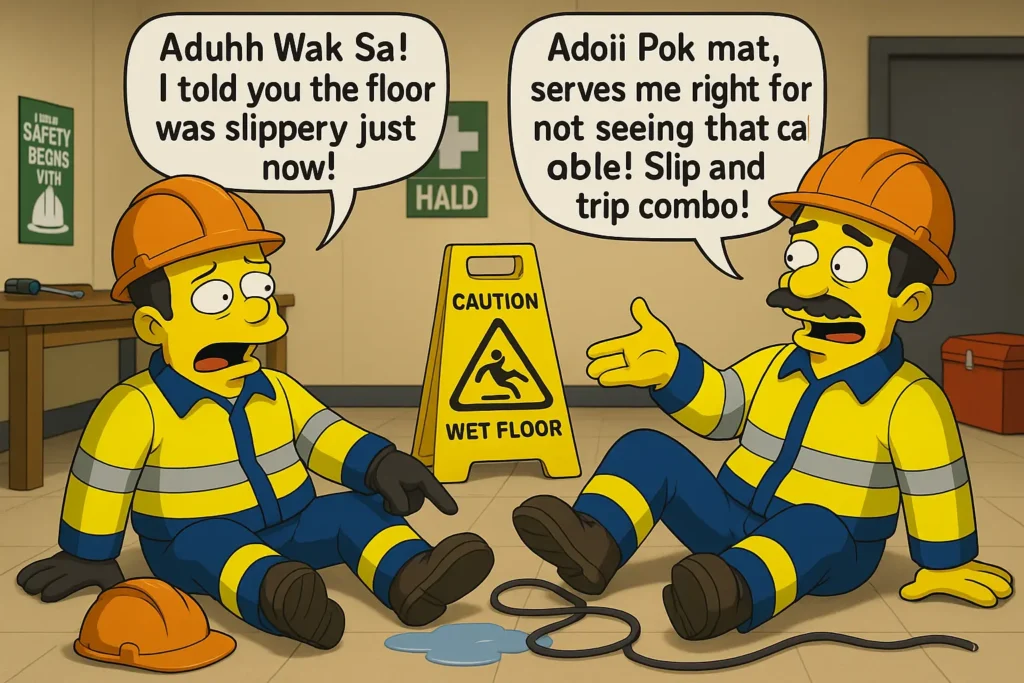
Understanding Slip Hazards
From various studies, slips rarely happen on clean and dry floors. Problems usually occur when the surface is wet, dusty, oily, or dirty. If the floor is made of ceramic tiles, varnished wood, or smooth concrete, just a little bit of oil is enough to make someone lose balance.
This is especially common at housing projects or sites with unfinished surfaces. Rougher textures, such as stone-finish tiles, generally reduce the risk of slipping.
To reduce slip risks:
- Keep the floor free from water, oil, or dirt that could cause people to fall, including visitors and the public.
- Check cleaning machines regularly to ensure there are no leaks.
- After rain, always dry the surface properly and place warning signs like “Caution: Wet Floor”.
- For new construction, test the ceramic tile installation in toilets or wash areas to ensure water flows properly to the drain. If water pools in certain spots, it means:
(a) the tiles are uneven and need to be reinstalled, or
(b) the drain may be blocked.
Understanding Trip Hazards
Tripping happens when the walking surface is uneven, obstructed, or poorly maintained.
Common causes include:
- Holes, debris, or tools left on the floor such as drills or hammers.
- Uneven flooring or loose tiles.
- Exposed cables or pipes running across walkways.
- Tree roots on the ground, which are common during site inspections, land clearing, or tree-cutting work.
- Smooth floors without non-slip mats or coverings.
Other Contributing Factors
Apart from floor and housekeeping issues, trips and slips also occur due to:
- Work on slopes or hilly areas, especially during highway construction or site investigations.
- River, flood, or coastal projects involving bridge or dam construction.
- Poorly lit areas that reduce visibility.
- Sudden loud noises such as piling or blasting, especially at quarry sites.
- Crowded or cramped workspaces.
- Workers bumping into others carrying materials manually.
- Uneven public walkways, affecting people with disabilities or elderly pedestrians.
- Exposed or damaged electrical cables that pose both tripping and shock hazards.
Wearing the Right Safety Shoes
Wearing the correct safety shoes can prevent both slipping and tripping. Safety shoes are part of Personal Protective Equipment (PPE) and must meet proper standards such as DOSH-SIRIM certification or other nationally-recognised marks.
Buying cheap, low-quality safety shoes or wearing leather shoes at work can increase risks. Workers may step on nails or experience electric shocks from exposed cables.
Even with good shoes, smooth or wet floors at construction sites should still be covered with non-slip mats and marked clearly with warning signs.
Wearing slippers at work should be strictly prohibited, especially in construction. If a worker has a foot injury that requires slippers, they should be reassigned to other duties or given medical leave.
Lesson Learned
Most people tend to focus only on PPE and safety shoes when discussing safety. But in reality, slip and trip hazards deserve just as much attention. A little water, clutter, or cable in the wrong place can be enough to cause an accident.
Good housekeeping, awareness, and discipline are the simplest forms of prevention.