
Without proper risk management, no occupational safety, health, or environmental management system can ever be considered complete.
Every organisation, regardless of size or industry, must manage risks systematically to ensure its people, processes, and property are protected.
What You Should Know About Risk Management
The first thing to understand is the types of risks present in your workplace and the controls needed to manage them. Risk is part of every operation and cannot be separated from planning, processes, or daily activities.
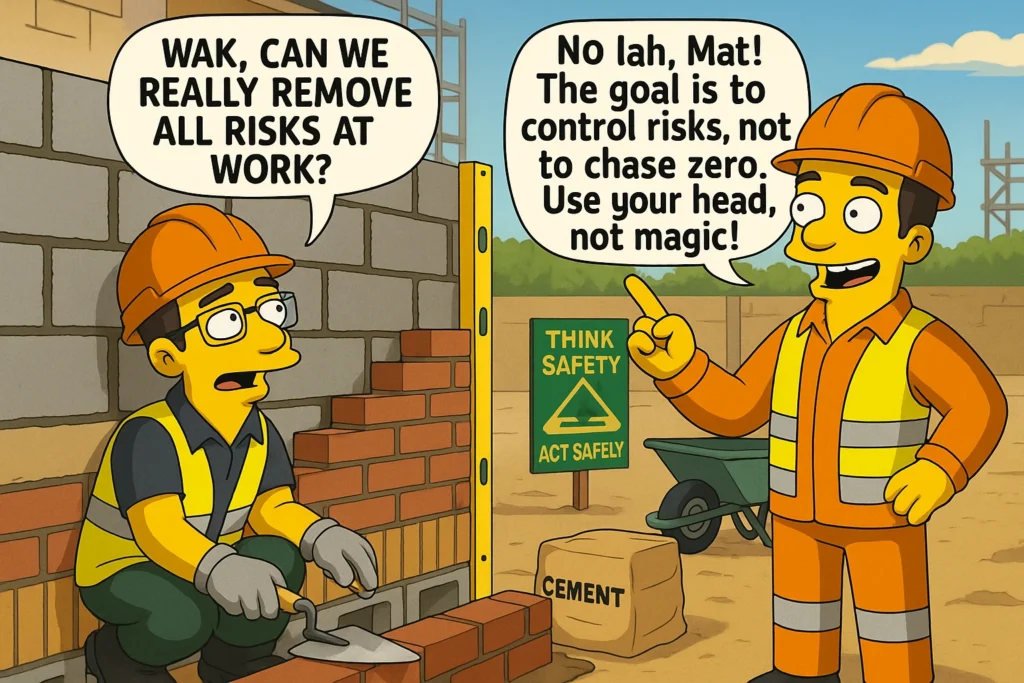
A common mistake is trying to eliminate all risks instead of reducing them. The goal of zero risk is unrealistic and burdensome. Instead, focus on identifying the main risks and managing them effectively.
Many organisations waste time assessing irrelevant or unlikely risks, often because they copy templates or formats from the internet.
Remember, risk assessment must be site-specific and realistic to your workplace. Each identified risk should answer key questions such as:
- How serious is it? For example, could it cause injury or lead to lost workdays due to sick leave?
- What is the potential impact and likelihood?
- Are there alternative control methods (Plan B) if the first doesn’t work?
Not all risks can be easily identified. Some appear unexpectedly, like slipping on a wet office floor. This is why risk identification should include all areas, even low-risk environments like offices.
Proactive identification of every possible hazard allows you to plan preventive or mitigation actions effectively. That’s how you develop better work schedules, clear safety signage, and smoother operations overall.
Choosing the Most Practical Solutions
There are many ways to control identified risks, but never start by solving only the easy or cheap ones. Doing so might cause you to ignore bigger, more dangerous risks.
Focus first on major risks, because each major risk often contains several smaller risks. For example, if a gas pipe is leaking, the solution isn’t just patching it. You must check the material quality, supplier credibility, and test certificates to ensure long-term safety.
Think of risk control as an investment, not an expense. Effective solutions save money and increase productivity in the long run.
Here are some practical approaches to reduce workplace risks:
- Improve work methods. Rotate tasks to reduce repetitive strain. For example, bricklayers can alternate between laying bricks and mixing concrete.
- Adjust work schedules. Prevent fatigue by rotating workers every few hours instead of relying on long shifts.
- Separate risks. Use barriers, signage, or restricted access between public and work zones. Secure chemical storage areas or use pumping systems instead of manual handling.
- Use inductions and toolbox meetings. Communicate risks in simple language. Avoid technical jargon. Use visuals, translations, or gestures if necessary.
- Classify workers. Group employees by skill and experience. Use helmet stickers or uniform colours to identify trained workers or new hires.
- Maintain consistent controls. Ensure all safety and environmental policies are visible at work areas and translated where necessary.
- Be a people-friendly supervisor. Supervisors should be patient, respectful, and approachable. A leader’s attitude determines whether workers trust and follow instructions.
- Perform inspections and reviews regularly. Review risk assessments at least every three months to catch overlooked hazards and update mitigation plans.
Review and Improve the System
Review your safety and health management system every one to two years and continuously improve it. Before making updates, ask these key questions:
- Is improvement really needed?
- Why is it necessary?
- What lessons were learned from past incidents?
- How can future risks be reduced?
Lesson Learned
Remember that things change whether people, technology, and systems all evolve. What works today may not work tomorrow. Keep these points in mind:
- People get bored hearing the same reminders every day.
- Technology changes, replacing outdated methods.
- Root cause investigations matter more than finger-pointing.
- Workers may take shortcuts when they’re tired or disengaged.
- When someone is absent, find out why before blaming, there might be a deeper issue.
- Maintenance applies not only to machines but also to systems and people.
- Workers often forget what they learned in past training.
- Equipment and machinery will eventually fail, plan for it.
Effective risk management is not about perfection, but about continuous learning, improvement, and care for the people who make the system work.