
There are still many who hold mixed feelings about Occupational Safety and Health (OSH). It’s quite disheartening to see when some top management figures focus solely on company profit without giving equal attention to the welfare of their workers.
Over the years, I’ve heard all sorts of remarks about OSH, some frustrating, some eye-opening, but all too familiar in our line of work.
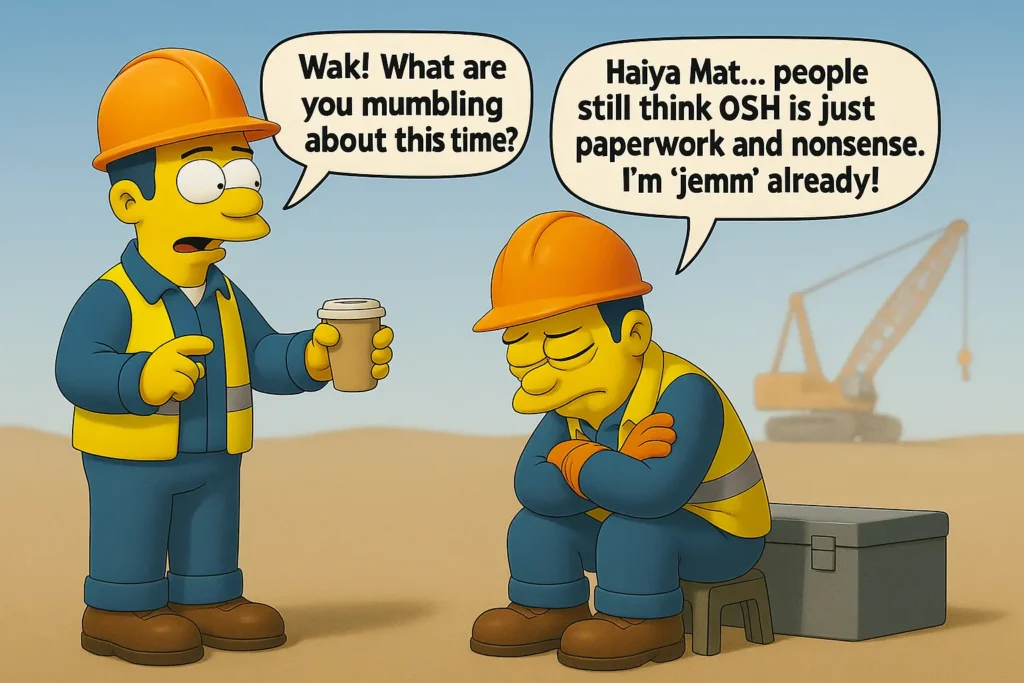
“The Department of Occupational Safety and Health (DOSH) always causes trouble. I’m afraid of DOSH — they’re too strict! Don’t report when there’s an accident. Just cover it up!”
“As the Managing Director, I don’t want to end up in jail if someone dies at work. The fines are too high; the company could go bankrupt!”
“If anything happens, the Safety and Health Officer (SHO) should be fully responsible.”
“The SHO is paid a high salary to take care of safety matters, so he should be the one signing the policies and documentation, not the Managing Director.”
“We need ISO 45001 certification because top management is pressuring us. Our competitors already have it. It’s easy to get anyway — just prepare the documents and the certificate will come.”
“I’m the boss. Why should I need a green card to enter my own site?”
All these comments, as strange as they may sound, reflect a mindset that still exists in many workplaces today. And whether we like it or not, these perceptions shape how people act towards safety.
Why All This Happens
In truth, these attitudes often stem from a few core issues such as misinformation, a culture of fear, lack of concern, and an excessive drive to cut costs.
When people see OSH as a burden rather than a necessity, they start taking shortcuts. Some may say, “Scaffolding is expensive, second-hand ones are good enough,” or “Foreign workers can handle tower cranes too, and they’re cheaper.”
Others complain about the amount of paperwork such as procedures, plans, manuals, checklists, and insist that audits are no different from inspections.
There are even situations where the boss himself has no proper safety background, yet no one dares to speak up because, as they say, “He’s the one who pays our salary.”
And then there’s the familiar frustration: “We already have ISO 45001 certification, but accidents still happen. What’s the point of ISO? It’s just a waste of money.”
These sentiments, though common, show how misunderstood OSH truly is. It’s not about certificates or compliance on paper. It’s about changing how we think and act towards safety.
Lesson Learned
Occupational Safety and Health (OSH) was never meant to make anyone’s life difficult. It is, at its heart, a proactive effort to prevent unwanted incidents that can cause losses far greater than whatever investment we put into safety.
The purpose of OSH is not to satisfy regulations or impress auditors; it’s to protect lives, maintain dignity, and build a safer workplace for everyone.
Still, we have to be honest. OSH is not some magic bullet, sacred water, or black box that can instantly solve every workplace problem. It is a continuous and collective effort that demands involvement from every level of the organisation, from directors to workers on the ground.
Real change takes time, and results don’t come overnight. But when every person understands their role and genuinely cares, safety becomes more than just a policy. It becomes part of the organisation’s culture.
In the end, safety and health at work are not just compliance items to tick off a list. They are values we live by, values that protect lives, families, and futures. And that’s something worth every bit of effort.