
Making a decision to stay safe for people, equipment, property, and the environment does not mean that all accidents or damages will suddenly stop.
It simply marks the beginning of a much longer journey. The intention is noble, but it is only the first step toward proper planning and lasting change.
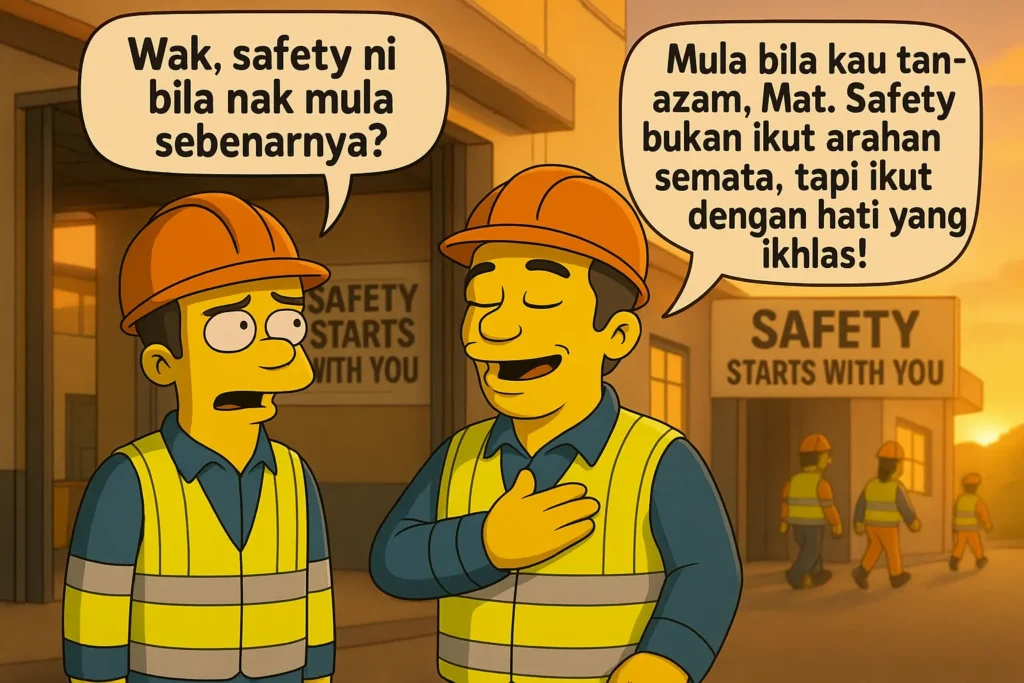
Choosing to embark on a journey of safety and health requires learning, patience, and consistent effort. It demands energy, time, and yes, even financial investment.
Safety is the foundation of everything we do as an organisation. It should be embedded in every plan, every task, and every decision. It must start on the very first day of work and remain a priority every single day after that.
Safety culture does not grow overnight. It needs to be introduced through genuine effort, education, and engagement so that every employee can embrace it.
This can be challenging and unique in every industry, but it remains the right thing to do. Every step we take toward safety is a step toward protecting lives.
There is purpose in every step we take.
There is life in every breath we give.
There is certainty in every hope we hold.
And there is an answer in every prayer we make.
Reaching the desired change is never easy, but there is no challenge too great when leadership leads by example. Cultural transformation must first begin with leaders who are willing to change, before it can reach every level of the organisation.
This is what we call leading by example. To be a true leader in Occupational Safety and Health, all levels of management must move in a progressive and unified rhythm.
Over time, this will evolve into a natural workplace culture — one that is ready to meet world-class standards.
Without a strong safety culture, it is impossible to reach that level. Beyond commitment, we must also provide the right resources and proper funding for manpower and training. Talking about safety without real action will never make it happen.
Workers must be empowered to take responsibility for their own safety and that of their colleagues. They should have the right to refuse work that is unsafe or beyond their understanding of potential risks and hazards.
Employers, on the other hand, must be open to discussion, assessing issues critically and collaboratively to prevent harm before it happens.
Lesson Learned
Taking responsibility to manage workplace safety with the same importance as other business functions is a mark of true leadership and integrity. Safety is not just a policy; it is a core value that requires personal commitment at every level of the organisation.
Whether you take up your role as a Safety and Health personnel by choice or by assignment, carry it with determination and sincerity. Remember that you are safeguarding human lives — the lives of your fellow workers.
And while you dedicate yourself to protecting others, never forget to protect your own as well.