
It is both a duty and a moral responsibility for every employer to ensure that their workers have access to safe, clean, and humane facilities.
Workplace safety is not only about helmets and hazard signs, it’s also about dignity, comfort, and care for the people who make the work possible.
Here are the basic yet essential provisions every employer should maintain for their employees:
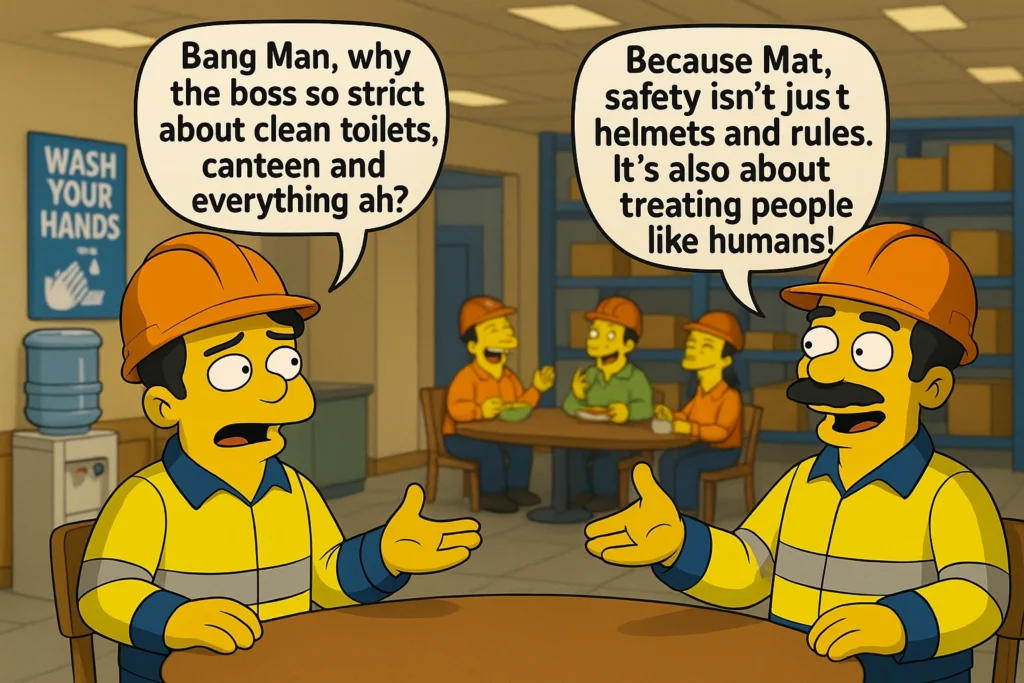
- A clean and hygienic canteen. This includes proper food preparation methods, clean utensils, and suitable attire for cooks and servers such as aprons, hats, and uniforms.
- Well-maintained toilets. Separate restrooms for men and women are strongly encouraged to maintain comfort and privacy.
- Adequate washing facilities. There should be sinks, water basins, and proper drainage or storage for wastewater.
- Sufficient supply of clean water. Drinking and washing water must be safe and accessible to all employees.
- Hand-washing stations and showers. Where necessary, provide soap, clean towels, or hand dryers to maintain hygiene.
- Areas for drying and storing clothes. Lockers or drying zones help workers keep their personal items clean and organised.
- Clear smoking and non-smoking zones. Designate and label them properly to avoid confusion and maintain indoor air quality.
- Rest and recreation areas. Where possible, provide spaces for workers to relax, eat, or take short breaks. This helps reduce fatigue and improve morale.
- Special protection for pregnant workers. No pregnant woman should be required to perform strenuous field work. If present, their tasks must be adjusted or lightened in accordance with workplace safety regulations.
Why Humanity Matters in Safety
Being an employer is not just about paying wages, it is about caring for human lives. Providing proper facilities, clean environments, and fair working conditions reflects compassionate leadership.
A humane employer understands that when workers feel safe, respected, and valued, they become more productive and loyal.
Neglecting welfare, on the other hand, often leads to fatigue, illness, low morale, and accidents. The best workplaces are those where the management sees every worker not as a number, but as a human being deserving of comfort and dignity.
Lesson Learned
Caring for the health and wellbeing of workers is a sign of an employer’s humanity and integrity. Real safety starts from empathy by creating a workplace that respects life, protects health, and promotes dignity at every level.