
Many fresh graduates who just started working in the field of Occupational Safety and Health (OSH) often ask me how they can become good, reliable safety and environmental practitioners.
It’s a great question — but not an easy one to answer.
Still, here’s my humble attempt to share a few practical pointers that I hope can guide fellow practitioners out there.
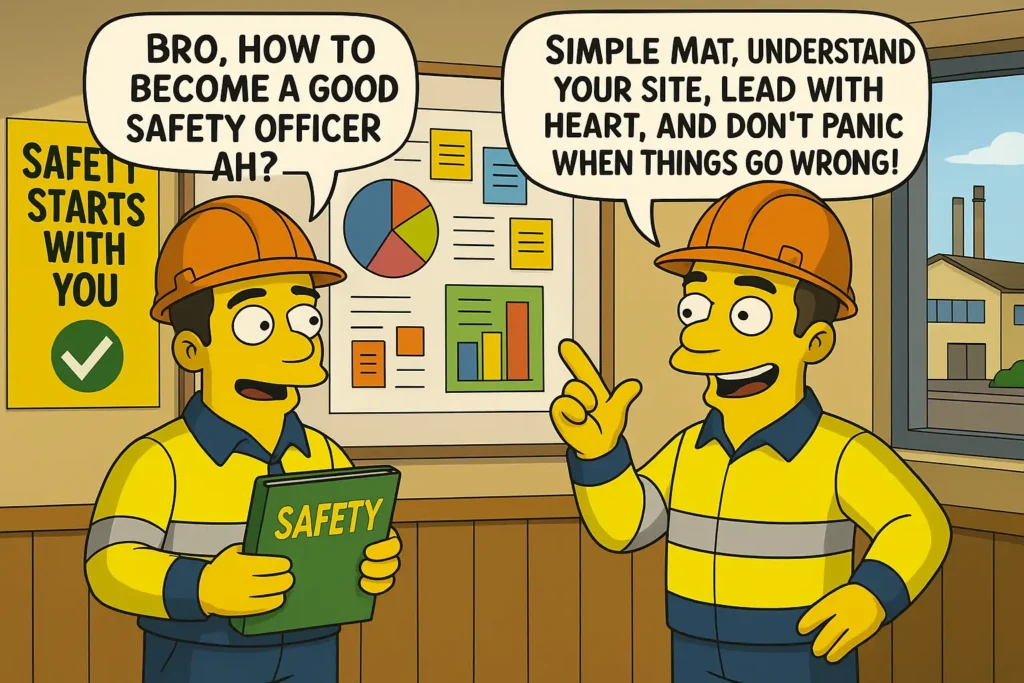
1. Understand Your Industry
The first thing any OSH practitioner should do after taking up the role is to understand the type of industry they are in. The safety, health, and environmental management approach differs between manufacturing and service sectors.
A system will never succeed if it does not align with the nature of the industry.
2. Build Technical and Management Skills
Gain both technical and managerial experience, skills, and qualifications. Technical knowledge helps in operational control, while management skills are crucial for planning, monitoring, and evaluating before and after operations.
3. Gain Management Support
Strong support from top management is essential. Without it, even the most well-designed OSH system will fail. A good practitioner knows how to communicate and influence leadership to adopt a safe work culture.
4. Coordinate Safety and Environmental Programs
Be the main coordinator for safety committees, awareness campaigns, training sessions, and all OSH-related programs. Consistent engagement keeps safety visible and active in daily operations.
5. Manage Documentation and Records
Understand what documents and records are required, how to maintain and update them, and how to ensure proper version control and accessibility. Good documentation reflects professionalism and accountability.
6. Speak with Facts and Data
Always support your arguments with facts, data, and references — whether from legislation, client specifications, standards, SOPs, risk assessments, or audit findings. Data-driven decisions strengthen your credibility.
7. Be Ready to Train and Communicate
Be prepared to conduct briefings, inductions, or training sessions anytime. Keep records of all sessions properly. A good OSH practitioner is also a good communicator and educator.
8. Be Approachable and Ethical
Stay approachable, fair, and professional at all times. Avoid bias or favouritism. A great practitioner is calm, ethical, patient, brave, and a good listener. Most importantly, never compromise integrity.
9. Stay Calm Under Pressure
Avoid blaming others, panicking, or shrugging off responsibility when asked for input on safety or environmental matters especially during incidents or emergencies. Your calmness will set the tone for others.
10. Cooperate Transparently with Authorities
When incidents happen, work closely and transparently with the authorities and other relevant parties. Respond quickly and efficiently to ensure that other operations remain unaffected during investigations.
Lesson Learned
Every safety practitioner wants to be their best and stay committed. Believe that you can, as long as you put in honest effort and patience.
If your workplace seems resistant to adopting a strong safety culture, stay calm, keep reflecting, and continue documenting your journey. One day, you’ll look back and smile, knowing that your persistence helped change how safety is valued there.
And as a last resort — if all else fails and lives are at risk — you can always call DOSH to conduct a surprise inspection.
But before doing that, make sure your own “armor” and “foundation” are ready. Otherwise, you might end up learning that lesson the hard way!